


Fast fashion giants such as H&M and TOPSHOP are investing heavily in online stores
Click:
Time:2018-02-10 00:00:00
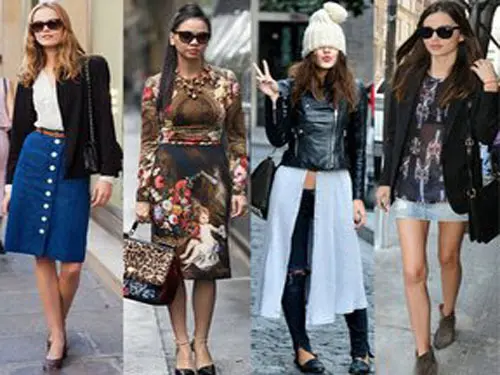
A few years ago, ZARA, H&M, Uniqlo and other fast fashion brands gathered to accelerate the layout of the Chinese market, so that the Chinese clothing industry suffered from the impact of "Wolf." Today, a few years later, these fast fashion have begun to collectively do another thing: accelerate the layout of the e-commerce market.
A month ago, H&M brought all product categories to its e-commerce platform for the first time since entering China seven years ago. TOPSHOP, a British fast-fashion brand without a physical store in China, entered the Chinese market in a roundabout way by launching its official flagship store on Shangpin.com. On the 13th of this month, ZARA, which has opened its own online store, opened an official flagship store on Tmall. Fast fashion giants are more enthusiastic about e-commerce than ever before.
Looking at the current several fast fashion giants, their e-commerce paths in China are quite similar: opening their own online stores, and then entering platforms such as Tmall, online and offline at the same price. "Their entry into e-commerce won't change the apparel retail model the way bricks-and-mortar stores did in China." In the view of Analysys International analyst Zhuo Saijun, the fast fashion giant to do e-commerce to the industry feeling because there are all the acts, but for now, there is not much innovation.
E-commerce's share is still small
"For H&M, this is an important milestone in our multi-channel sales strategy." Magnus Olsson, general manager of H&M Greater China and Southeast Asia, commented on the opening of H&M's e-commerce platform. According to Magnus Olsson, Chinese consumers can buy H&M's latest fashion and home products anywhere, 24 hours a day, through their computers, smartphones and tablets.
Compared with H&M in China has more than 200 stores, TOPSHOP has not opened stores in the country, so the entry into Shangpin network to open a flagship store is considered by the industry to be a curve into the Chinese market. The Shangpin network, which defines itself as "the first station of global fashion light luxury", is indeed very powerful, and it specially hit TOPSHOP flagship store in the most important guide bar of the official website home page.
Although each is speeding up the money to enter the network, but it is worth noting that e-commerce in the overall sales plate of these big fast fashion giants or still account for a small proportion. Uniqlo, an early entrant to the e-commerce platform, has opened a flagship store on Taobao since 2009. Pan Ning, global senior executive vice president of Fast Retailing Group and CEO of Uniqlo Greater China, told the media in March this year that online sales accounted for about 6% of Uniqlo's overall sales in China, but the proportion is expected to increase to 20% to 30% in the future.
In fiscal year 2013 (as of August 31 last year), Uniqlo's turnover in Greater China was about 7.6 billion yuan. This figure is a conservative estimate, its e-commerce annual sales of more than 456 million yuan, if you exclude its double 11 last year during the sales of more than 100 million, in fact, the proportion of e-commerce in UniQlo sales in China is not high. According to the data provided by Analysys International to Nandu reporters, in 2013, the B2C clothing field (excluding Taobao), the overall sales last year was 258.19 billion yuan.
For this great "touch the net" impulse of fast fashion giants, Zhuo Saijun believes that this is to see that the development momentum of the domestic e-commerce market is good, and the offline physical store industry generally suffers from the impact of overcapacity, but at present there is not much innovation, nor do you see that e-commerce is particularly helpful to its overall business.
Fill the gap in the third and fourth line markets
In view of the fact that many clothing brands destock through e-commerce in the early stage, the e-commerce of the clothing industry can not get rid of the consumption impression of "low price". Although there are special price areas on the e-commerce platforms of several fast fashion giants, the discounts of special products range from 50% to 20%, but they are simultaneously insisting on a bottom line: the same price online and physical stores.
Online sales have more obvious cost advantages, but the fast fashion giant implements the same price strategy online and offline, which means that it does not want the online sales to impact the physical store too much. In Zhuo Saijun's view, although it is the same price online and offline, there is a problem of how to cooperate between the two sets of internal mechanisms of physical stores and e-commerce teams and how to maximize their value.
Wang Jiansi, a senior retail expert in the clothing industry, believes that this mode of operation is equivalent to the fast fashion giant's positioning of e-commerce is only in addition to the physical store, and there is one more store to meet the consumer demand. "On the one hand, there is no advantage in price, and on the other hand, the service ability is not as good as physical stores, and the development space of fast fashion giants in the e-commerce field is not expected to be very big at this stage."
So how big is the space for fast fashion to do e-commerce? "Whether it is H&M, ZARA or Uniqlo, its coverage of physical stores in first-tier cities is sufficient, but the layout of third-tier cities is not very perfect, and power e-commerce can help it do a good job in these third-tier markets." Trosaijun thinks.
This may play into the calculations of the fast fashion giants. H&M told the Nandu reporter that, for example, our designer models are only sold in designated stores in first-tier cities, and now the online store is also sold simultaneously, which means that consumers in second and third-tier cities can also buy them through online channels; Household goods are also only sold in some stores, but now they can be purchased on the online store, which is to improve the shopping experience of consumers. "More and more consumers want to shop online, which provides an important channel for consumers to buy H&M products, and the physical and online stores are complementary channels." H&M said.
Online traffic is diverted offline
In fact, the physical store is still the core of the fast fashion giant, even the online platform is also for the offline drainage. On Uniqlo's APP, the reporter saw that it provided the location guidance of the back store, and the coupon two-dimensional code provided by its online APP was specially designed and can only be scanned and used in the physical store, so as to achieve online drainage to the store. MANGO, on the other hand, has a clothing search function on its global e-commerce platform, so that by entering the number and the customer's region, it can find whether the store in the city has stock. MANGO is also trying to drive traffic to physical stores. After consumers place orders online, they can pick up goods at designated physical stores for free shipping.
Control where traffic goes
Unlike other clothing brands that first entered the platform with huge traffic such as Tmall, the path of fast fashion giants to intervene in e-commerce is the opposite, and they are more willing to establish their own online mall first. At the end of 2012, ZARA opened an online store and officially entered the field of e-commerce, until this month it entered Tmall; In response to the Nandu reporter about whether it will open up more online channels, H&M cautiously said that the current focus is to do a good job of online store consumption experience, and there is no plan to enter other platforms.
"If you first enter Tmall, traffic and access are restricted by Tmall, all brands will encounter the problem of who the traffic is, who controls the user who controls the brand." For the fast fashion giant "touch the net" to start from the independent e-commerce caution, Zhuo Saijun believes that the fast fashion giant has the consideration of the ownership of traffic. However, Zhuo Saijun also pointed out that if you do independent e-commerce, relying on their own brands and products to absorb traffic, there are also great difficulties.
As an early starter in the e-commerce field in the fast fashion camp, Uniqlo seems to be looking for a balance point. Nandu reporter found that in its official website to place an order, you need to log in to Taobao ID, which means that Uniqlo's official website and Tmall flagship store are sharing Taobao's technical background. Uniqlo also has its own APP, but when placing an order in the APP, its page will automatically jump to Tmall, which means that the traffic of the APP is directed to Tmall.
Tel:020-86733488
Fax:020-86733499
E-mail:dcbutton@dcbutton.com
Add: No. 20, Xinghua Road, Tanbu Town, Huadu District, Guangzhou City, Guangdong Province
Follow Us

 @DongChuan buttons

 @DCButtons

Guangzhou Shenda Metal Plastic products Co.,Ltd. All rights reserved
